


Summary
Encouraging mantras like “You can do hard things” aren’t as helpful as we’d think
Belief is the jet fuel for achieving goals, but belief is built in moments of effort, not mantras
Difficulties are where belief is built if we are sure to support them through it rather than rescue them from it

My son was ten years old, and he could not ride a bike.
We’d tried everything. Training wheels. Balance bikes. The guided handlebar while I ran for miles and miles behind him (win-win because I’m a runner!)
But nothing worked. It’s not that he couldn’t bike; it’s that he didn’t believe he could. And so he wouldn’t even try. And even when he did, once or twice, he crashed before his brain ever gave his legs a chance.
But summer was coming and so were his step-siblings, and they were avid bike riders. So the pressure was on if he didn’t want to be left behind.
One Saturday morning, we were determined. But every attempt ended in tears of frustration. It was the kind of defeat that settles into a kid’s shoulders, weighing them down with false beliefs about their deeper abilities.
I almost offered a flippant mantra, like we often do as parents… Believe in yourself. You can do hard things. Don’t give up.
But I knew better, and so I caught myself.
Welcome to part 11 of the 12-part series on Executive Function! If you missed any of the other articles, you can find them here.
Why Encouragement Alone Isn’t Enough
Let’s talk about growth mindset, goal setting, and resilience (and if you want a full 30-day Bible Study and activity guide, grab it on Amazon)

Growth Mindset
Most of us think growth mindset means telling a child, “You can do anything if you just believe.”
Maybe we download the list of encouraging phrases and hang up the posters in their room. But when life gets hard, they quit, and we wonder why.
It’s because mantras don’t build a growth mindset. In fact, they can often make us feel more defeated (more on that tomorrow.)
Dr. Carol Dweck is well known for her research on growth mindset and that research is clear: our brains aren’t stuck in a permanent state. Our brains are muscles and they grow in new ways every day…if we give them the opportunities to grow, that is.
That’s the part we skip. We want to offer a mantra to our kids, but are we offering them the opportunity to put it to the test? In real life? To get out there and do the hard thing (With support)?
That’s where belief is built. With practice. Trial and error. Small, provable moments of trial, error, and actual growth. Otherwise, belief stays theoretical and that’s a shaky belief foundation.
Goal Setting
Goal setting is how we turn a mantra into a plan. And effort put forth toward plans is how belief grows.
In the business world, we call it SMART goals: specific, measurable, achievable, realistic, time-bound. It’s how you measure progress. Why?
Because progress is what matters, more than outcome. It’s progress towards a goal that builds belief.
So break down the task into micro-goals. Every step achieved is a confidence boost to keep going.
My son didn’t need to be told he could ride a bike. He needed to be encouraged to try balancing, and then see that he could master that. He needed to be told how to brake, and then accomplish that. He needed to be coached through pedaling and then achieve that.
Each small win told his brain, I did the hard thing. I can do the next one too.
Resilience
Then there’s resilience, and here’s where the science gets uncomfortable for parents. Every time we protect our child from hard moments, we steal an opportunity to build confidence, and growth suffers. Then we wonder why our children struggle with resilience.
Resilience literature tells us children who grow up resilient are far more likely to have had one adult who stood beside them through something difficult. Resilience, by definition, is the ability to recover, adapt, and grow stronger through life’s challenges.
That means an adult’s role is not to shield the child from the hard time. It is to be present through the hard time, coaching them through the steps that build belief and confidence as we cheer them on.
Kids don’t build resilience in the absence of struggle. They build it in the presence of someone who believes they’ll survive it and keeps showing up while they do.
God Has Always Worked One Step at a Time
Scripture has been saying this all along.
We’re told we’re being transformed into the likeness of Christ, day by day, not overnight (2 Corinthians 3:18). That’s growth mindset in action before science ever gave it that name.
We’re told not to despise small beginnings, that the smallest step matters before we can even see where it leads (Zechariah 4:10). That’s goal-setting before the business world coined the phrase.
And when it comes to planning, we’re given a strange kind of comfort. We can plan our steps, write them down, work at them with our whole hearts, and still trust that the Lord is the one directing where they land (Proverbs 16:9). That takes the pressure off getting the plan perfect because every setback is a setup for God’s comeback. That’s resilience
So what does this look like in everyday parenting?
Practical Parenting for Today
· Notice It ·
Notice the moment your child stalls out before even trying. Maybe it’s a sigh or a muttered “I can’t”. Perhaps it’s eyes that won’t meet yours because they’re filled with defeat before they even start. In my kid’s activity book, the Self-Interview activity starts here on purpose, asking a child what feels challenging and who encourages them before we ever ask them to change anything. Noticing out loud, “It looks like this feels really hard right now,” tells your child you see the struggle before you try to fix it.
· Name It ·
Name what’s actually happening. It’s not laziness or a bad attitude, but a nervous system feeling defeated before it’s even had a chance to try. Give language to that. The Superpower Yet activity in my book has kids say the hard sentence once without the word “yet,” then say it again with “yet” tacked on the end, and feel the difference in their own mouths. “I can’t ride a bike” becomes “I can’t ride a bike yet.” Yet is where hope lives.
· Nurture It ·
Nurture it with one small, specific next step, never the whole mountain at once. The Small Steps to Big Dreams staircase in my book has a child write the big goal at the top and break it into three to five small, doable steps underneath, checking one off at a time. Nurture also means celebrating the step, not just the finish line: “You took a step” matters more, in the moment, than “You did it.”
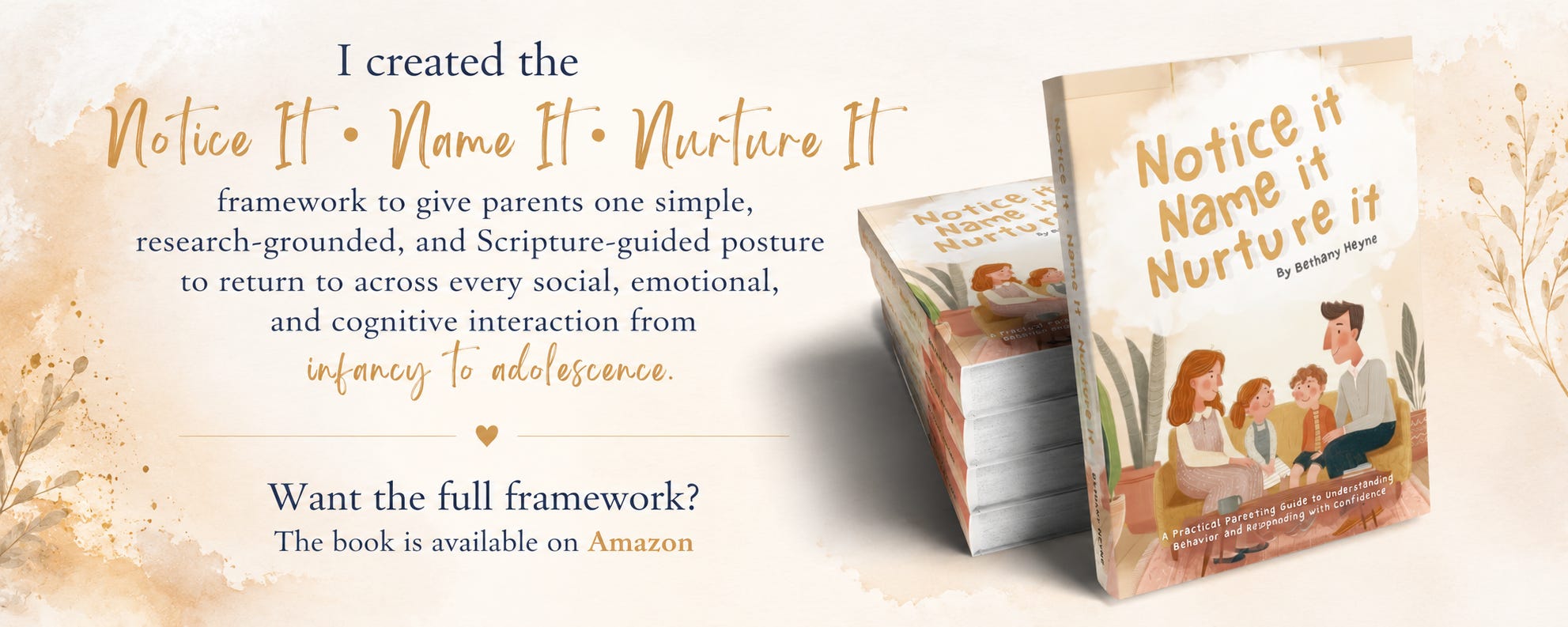
Want the full framework for Notice It · Name It · Nurture It? The book is available on Amazon: Notice It · Name It · Nurture It
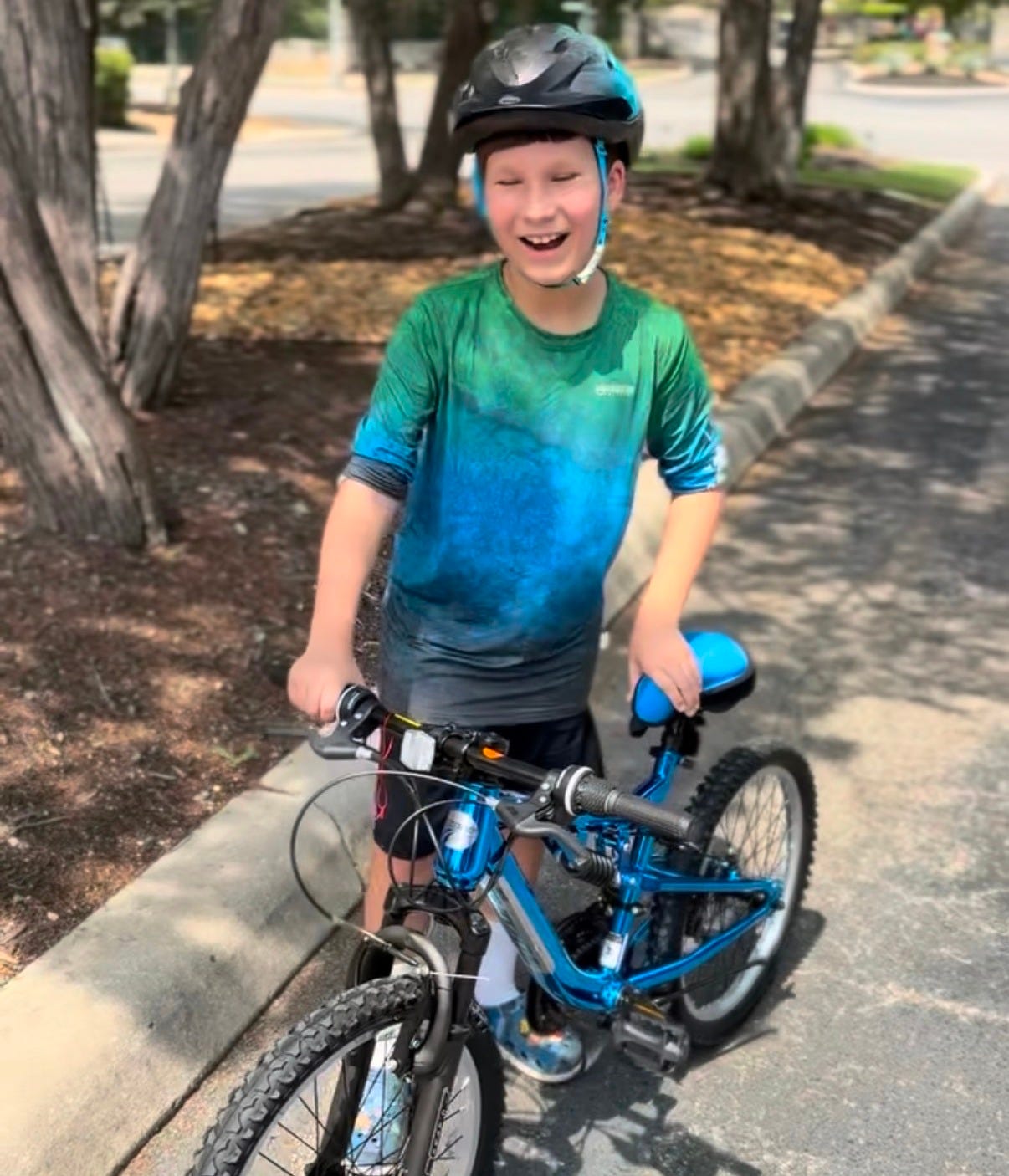
The Moment That Brought Us Both to Tears
We broke the steps down, one at a time. And in two-and-a-half days, my son was riding his bike.
As he made a calculated stop at the curb, he looked at me with tears of joy and slight disbelief as he said, “Oh my gosh, Mom! I never believed I’d learn to ride a bike.”
Then he hugged me and said, “Thank you so much for believing in me even when I couldn’t, and for teaching me how to believe in myself.”
My son isn’t thinking about his bike anymore. He’s thinking about the next hard thing, because now he has proof, real lived proof, that he can do hard things.
That’s what the executive function of goal-directed persistence looks like in a ten-year-old brain. It looks like tears turning into confidence over two and a half days, one small step at a time.
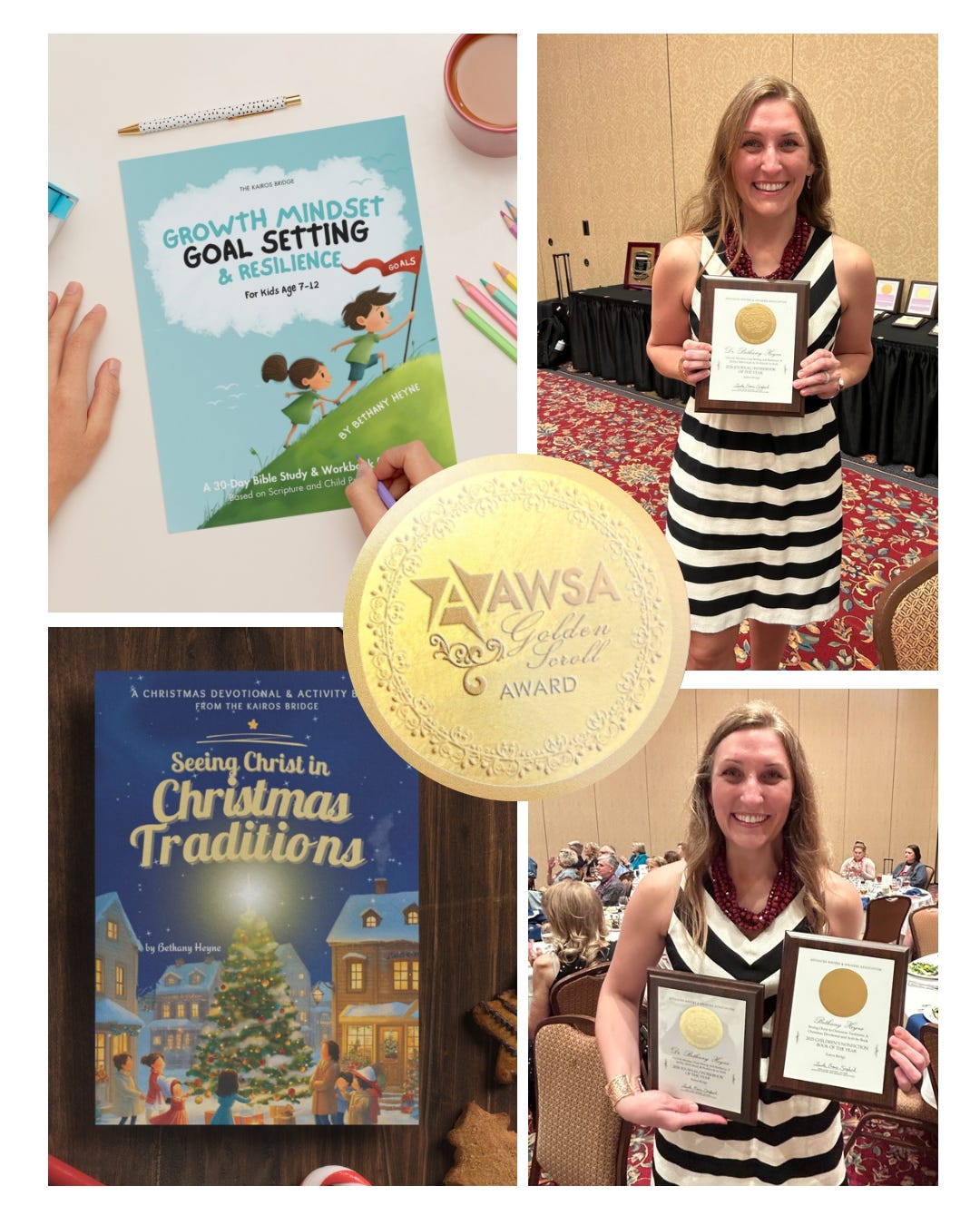
If you want a guided, thirty-day path to build this in your own child- growth mindset, goal setting, and resilience woven together with scripture and science- my book just won first place for children’s nonfiction from AWSA. You can find it on Amazon, and I’d be honored to walk this journey with your family too.
Some great encouragement and practical advice. Thank you, Bethany!
I so appreciate the practical wisdom you're sharing in this Executive Function series, Bethany! So sound and so useful. I remember employing those "you can do this" mantras with our kids, but how much better to foster experiences that actually build their belief that they can do it instead, by breaking the larger goal down into manageable, attainable steps. And the biblical parallels are amazing. Thank you!