


Summary:
Being organized isn’t a personality trait. It’s a cognitive skill for childhood development
Organization isn’t about being tidy. It’s about reducing chaos & mental load
Some people get organized, others stay organized, and habit loops are the difference
You bought the fancy backpack with all the little pockets, the color-coded dividers, and the personalized labels. And then you spent all of Saturday organizing it for them.
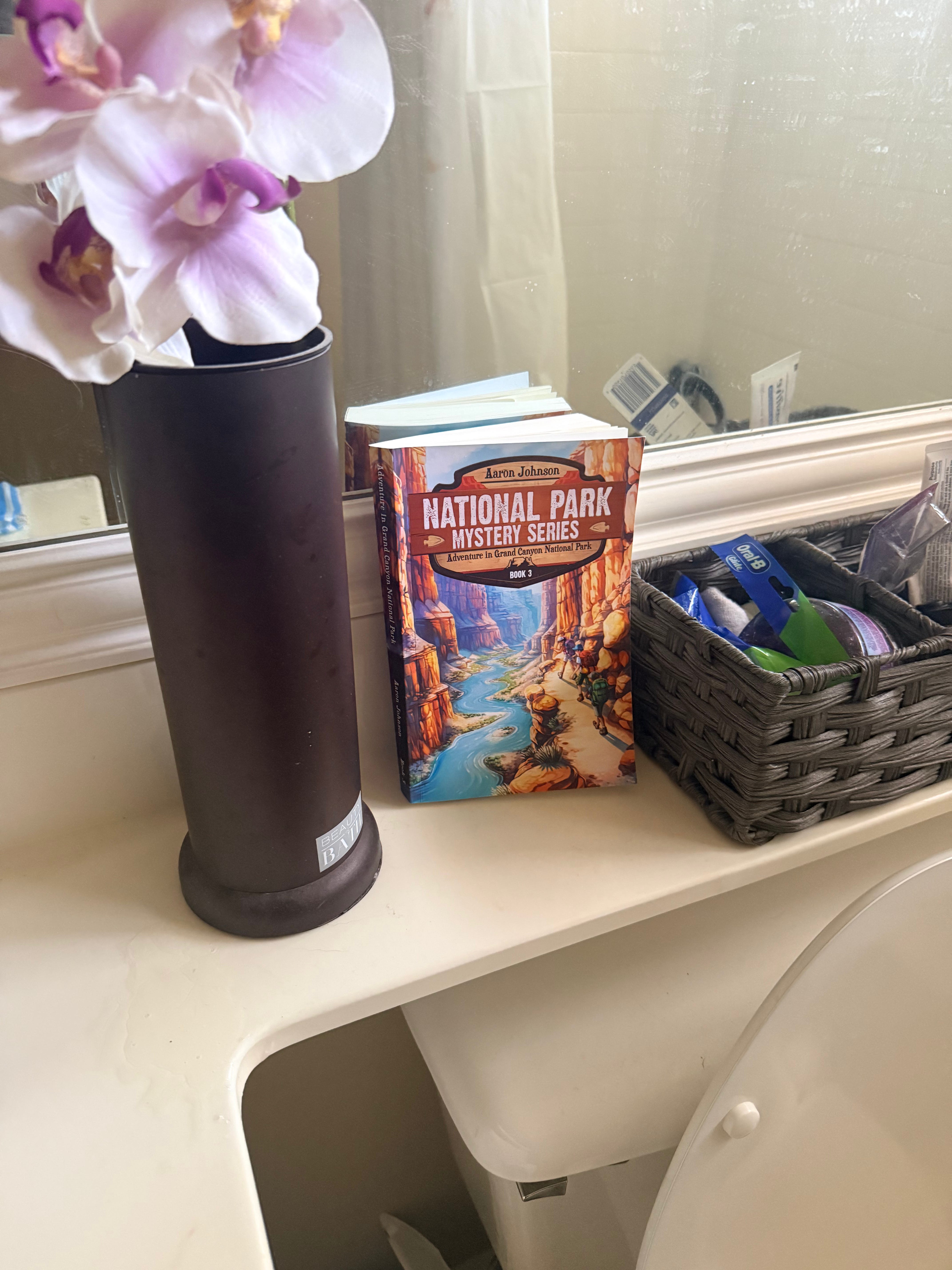
But by Wednesday, the homework is crumpled in the bottom of the backpack, the permission slip has vanished, and somehow one of your kid’s library books is in the bathroom (true story!)
And you’re left wondering, “Why are they so disorganized?”
Disorganization Isn’t A Personality Trait
Organization isn’t something you have or don’t. It’s a skill on a continuum, and it can be strengthened.
People with strong organization skills often appear more capable. The secret is that they’ve freed their brain from being overwhelmed by chaos so they can focus on more complex executive functions like planning, prioritization, impulse control, sustained attention, and task initiation.
You’ve experienced it yourself as you walk into either a tidy or tornadic office. Which one allows you to focus on the looming deadline? Imagine how our kids feel. And suddenly, they’re believing the lie “I’m just not a very organized person.”
Organization Lowers Brain Stress
A messy backpack, binder, or bedroom is a lot like “If you give a mouse a cookie…”
If they sit down to do homework, they need a pencil.
When they can’t find a pencil, they use a pen.
But they make a mistake with the pen and need white out.
Unable to find white out, they look for a new sheet of paper.
Unable to find a clean sheet, they go in search of a new pack of paper.
Before long, 20 minutes of homework time is gone, they’re exhausted, and they haven’t even made it past the first algebra problem.
The more time they spend locating items and deciding routines, the more decision fatigue erodes their mental energy, leaving less space to focus on the meaningful activities.
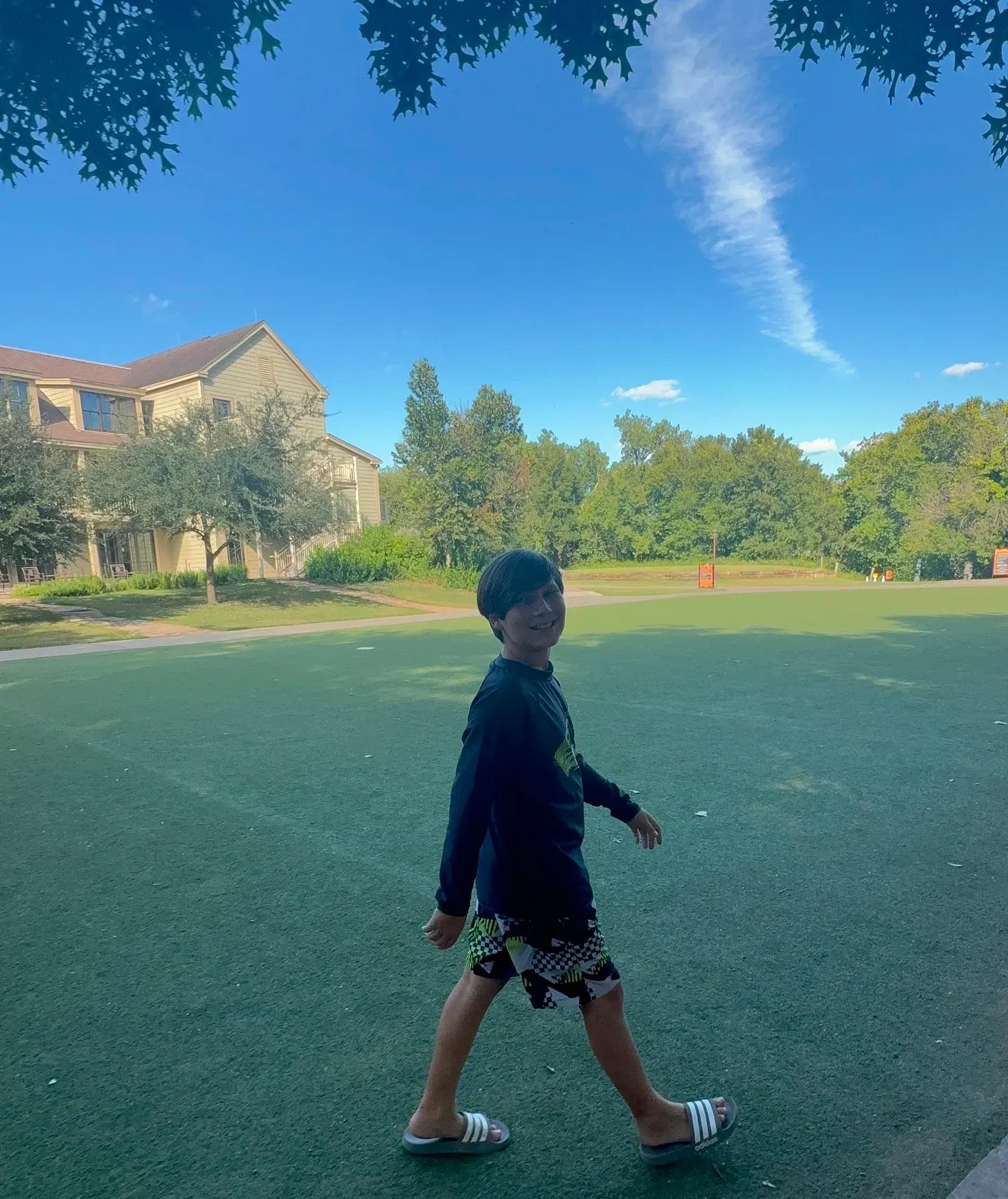
This weekend, I asked my 11-year-old, “What’s the hardest part about being organized?” (Full disclosure: he’s highly praised by his teachers for being so well organized, and even this was his answer…)
Without hesitation: “Staying organized. It starts off great, but you have to spend the extra time to keep it that way. Everything has to go back to its home without being left somewhere random. But that’s hard when I’m building a LEGO, and you call me down for dinner right away.”
He’s not alone. At times, we all struggle with one of two elements of organization.
Getting Organized and Staying That Way
Perhaps you’ve organized their room before, yet it’s messy again by Friday. It’s frustrating, but consider this:
Were they included in the get-organized process, meaning did they get to decide where things went and how it was arranged? Lack of ownership extinguishes motivation to stick with something.
Was a new habit loop created to help them stay organized? Without a new habit loop, the brain defaults to its previous practices. Help them build a new habit using the cue, routine, reward method (If you haven’t read The Power of Habit, it’s a great book.
Humanity has long struggled with getting and staying organized, at least without the help of someone to teach us the ropes.
The Greatest Organizer of All
God started us off in an organized system. Have you ever noticed the sequencing in Genesis 1? Every verse pairing between verses 4 & 5, verses 7 & 8, verses 9 & 10, says “God separated” and then “God called”. That’s organization and labeling on a loop.
Then God filled the earth with animals, birds, and sea creatures and invited Adam to be part of the naming process.
We do the same as parents when we provide supplies, colored folders, bins, and cubbies, then allow our kids to name what goes where.
What then when kids struggle to stay organized?
God frequently provided organization resets. Just look at Noah after the flood, the Israelites in the wilderness, and the tribes of Jacob. The list goes on.
We frequently fall into chaotic disarray, but God swoops in to provide fresh guidance and support. We can do the same when we coach our kids through building healthy habit loops.
Formation for Today
· Notice It ·
Where does your child struggle most: getting organized or staying organized?
· Name It ·
If they struggle to get organized, set aside time to work out a plan together, and let them be part of designing it. A helpful cue phrase is, “Every object needs to have a home. Where should that one belong?” Just tackle one object or one room at a time to avoid overwhelm.
If they struggle to stay organized, coach new routines like “Touch it once, not twice” (meaning, don’t set it down and have to come back later to put it away) or “Just 9-extra-seconds” (meaning, if they spend 9 extra seconds putting the item away now, it could save them 10 - 20 minutes of searching later)
These routines move the child from a shame-based label like “I’m messy” to “My brain needs a better system.” They also allow us to move from nagging to encouraging a healthy brain skill.
· Nurture It ·
Help kid recognize the rewards of the systems, especially when time is saved tomorrow morning or when it’s easier for them to find their toys before running down to the playground. When systems fail, simply reflect, “It’s a bummer we lost that time today. Next time, be sure to put the shoes where they belong so it can save you time”
Ultimately, the goal is for us to notice the overwhelmed brain before we see the messy room, to help our child understand the skill they’re developing, not the flaw they think they have, and to build simple systems together until organization becomes less about remembering and more about living in rhythms that bring peace.
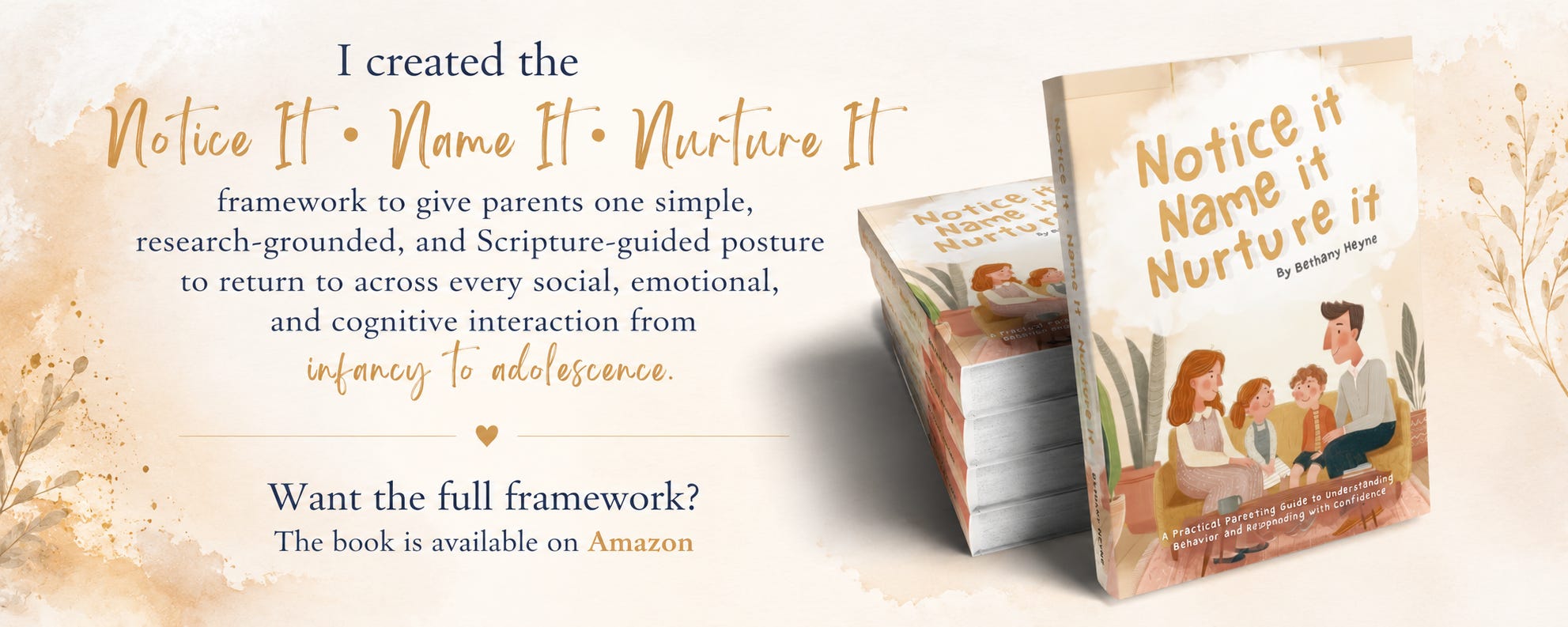
Want the full framework? The book is available on Amazon: Notice It · Name It · Nurture It
Thanks so much for sharing the restack, @Clarissa Briones !!