


Summary:
Last week, we covered emotional processing patterns & what feelings were designed to do
Today, we unpack why “feelings lie” sounds like wisdom but actually distorts God’s design
Next week, we’ll explore the risks of emotional numbing & how to reconnect to God’s design
Feelings Lie (from The Lost Heart Song)
Evie sprinted from the Dean’s office toward hers in the anthropology building. Noa trailed behind, shouting words of encouragement, but all Evie heard was the internal mantra of her father’s voice: Don’t get distracted. Feelings lie. Keep your head straight and follow plan B.
She intended to, if she could just get to her office. Today of all days, she’d forgotten her badge.
“Maybe it’s a sign,” Noa offered from behind. “Let’s grab dinner and talk about what just happened.” Noa left the word feelings out of it.
Evie snapped. “I have four weeks to find a pivot for my dissertation. I don’t have time to talk. And certainly not about my feelings.”
Noa went quiet the way a friend does when they’ve been slapped for trying to help.
“Evie…”
Evie turned slowly, hot tears threatening to spill.
“Fine,” she choked. “Dinner and brainstorming. No feelings.”
Noa sighed. Logic was important.
But she feared the day Evie would realize that calling feelings liars hadn’t actually disarmed them. It had just tucked them away with a countdown timer.

Where We Learned “Feelings Lie”
Evie didn’t come up with “feelings lie” on her own. It came from childhood as a form of emotional disapproval.
The fact is that most people weren’t raised in emotion coaching homes, not because their parents were cruel, but because the evidence on emotional processing didn’t really emerge until the late 90’s.
When you experienced emotions of pain and embarrassment in childhood, an adult responded in one of four ways, though emotional disapproval was often the most toxic: feelings lie.
Perhaps it wasn’t that harsh, and came out more subtly: Stop crying. You’re overreacting. Don’t be so sensitive. I’ll give you something to cry about.
Sometimes, emotional disapproval even sounds spiritual: God doesn’t want you to feel that way. The heart is deceitful. Feelings lie (implying we shouldn’t feel our feelings).
The truth is that this mantra is just a cognitive protective strategy designed to protect our minds from processing discomfort. We try to convince ourselves that better logic, reasoning, and judgment will help us overcome such feelings (spoiler alert: it actually circumvents God’s invitation to bring feelings to Him!)
This approach to emotional disapproval is not without long-term health consequences, and it’s contagious. We learn it, and we pass it on to our kids.
What It Does to Our Kids
Here’s the problem. “Feelings lie” doesn’t teach a child to regulate their emotions. It teaches them that their emotions aren’t safe, have no space in the room, and need to be kept in check if they want to keep the peace. Slowly, they disconnect from themselves in order to be loved.
We lose our temper and yell. Now our toddler is in tears, “I’m scared when you yell.” When we snap back with “Feelings lie; I barely raised my voice,” the child doesn’t learn that their feelings aren’t a basis for drawing conclusions. They learn that their feelings are inconvenient, untrustworthy, and can be overruled. So they stop trusting their feelings and eventually stop bringing them up to anyone.
Years later, our kiddo is struggling with test anxiety. Their stomachache is real. Their fear is real. “I don’t feel well,” morphs into “I can’t do this.” A well-meaning adult, hoping to build resilience, says, “feelings lie; you can do this”, and moves on. But what the child actually learns isn’t resilience. It’s those feelings that aren’t worth bringing to anyone. So instead of learning to ask for help, they learn to go it alone.
Fast forward to the teen years, where they find themselves standing at a crossroads of tempting choices. Something feels off. It’s a quiet signal in their spirit, but they’ve learned not to trust it. Peer pressure meets them with logic, reasons it away, and backs them into a corner. And that feeling, the one God designed to ask questions or seek help, goes quiet.
The feeling wasn’t the problem. The missing piece was knowing how to interpret it.
God’s Design for Feelings
Before we go further, let’s deal with Jeremiah 17:9, because it’s the verse most often used to justify the “feelings lie” mantra.
The verse says “the heart is deceitful”, but the Hebrew word leb doesn’t mean feelings. It means the entire inner life: mind, will, understanding, memory, reflection, belief, and emotion. Which means we can’t blame feelings and call logic the solution, because according to this verse, that could be deceitful too. The whole inner life needs realignment. Not just the emotional part.
Where does that realignment happen? In the presence of God.
God openly expressed emotion throughout Scripture. So did Jesus. And Genesis 1:27 says we are made in their image.
Mantras like feelings lie sound wise, when in fact they are self-protection dressed up as discernment. But any mantra that pushes us to shun our God-given design and hide parts of ourselves from Him should raise our suspicions. Genesis 3 level suspicions!
The oldest play in the book is to take something God designed as beautiful and distort it into something that we devalue.
The serpent took one specific instruction about one specific tree and stretched it into all trees (Genesis 3:1b), to which Eve added her own layer about not touching it (Genesis 3:3b), followed then by the serpent’s spin to distort the truth about our relationship with God (Genesis 3:4a). A life-giving boundary from God became unrecognizable in the hands of the enemy, and the consequence was catastrophic to humanity.
“Feelings lie” works the same way. One feeling leads to a thought. A thought leads to a behavior. A behavior leads to an unfavorable outcome. Suddenly, a specific feeling signal gets exaggerated into a universal indictment: Feelings lie.
Eve could have stopped and said: No, not all trees. Just that one. I don’t know what the tree is for, so I’m going to go back to The Lord for guidance.
We can learn to say the same: This feeling is signaling something specific. I don’t know what yet, but I can seek guidance from wise mentors and God.
God did not make a mistake when He made our feelings. He designed them to signal something and to draw us close:
Matthew 11:28 tells us Come to me, all who are weary
Psalm 34:18 says The Lord is close to the brokenhearted
1 Peter 5:7 says to cast all our anxiety on Him
Matthew 19:14 shows Jesus saying Let the little children come to me (children, who are certainly balls of emotional energy!)
These passages don’t show a God who says, “feelings lie, ignore them, hide them, stuff them away.” These show a God who says, “Bring your feelings to me.”
This Week
God can reshape our hearts so we can reshape our children’s. That’s how we leave a better legacy. Practice interrupting the pattern of emotional disapproval this week:
Notice It: The next time a feeling rises and you hear the whisper in your mind calling your feelings liars or trying to shove them away, pause and ask: What am I actually feeling right now?
Name It: Separate the signal (feeling) from the story (interpreted thought). Ask: What am I telling myself about this feeling? Name the feeling. Name the narrative thought. They are not the same thing.
Nurture It: Before acting on the feeling or thought, pause your behavior. Bring it to a trusted friend, wise counsel, or God. The goal isn’t to make the feeling disappear, but to let God put it in its proper place, renew your mind, and direct your steps.
Feelings are not meant to be dictators. But they are not liars either. They are signals. And when we stop condemning them, we can finally start understanding them.
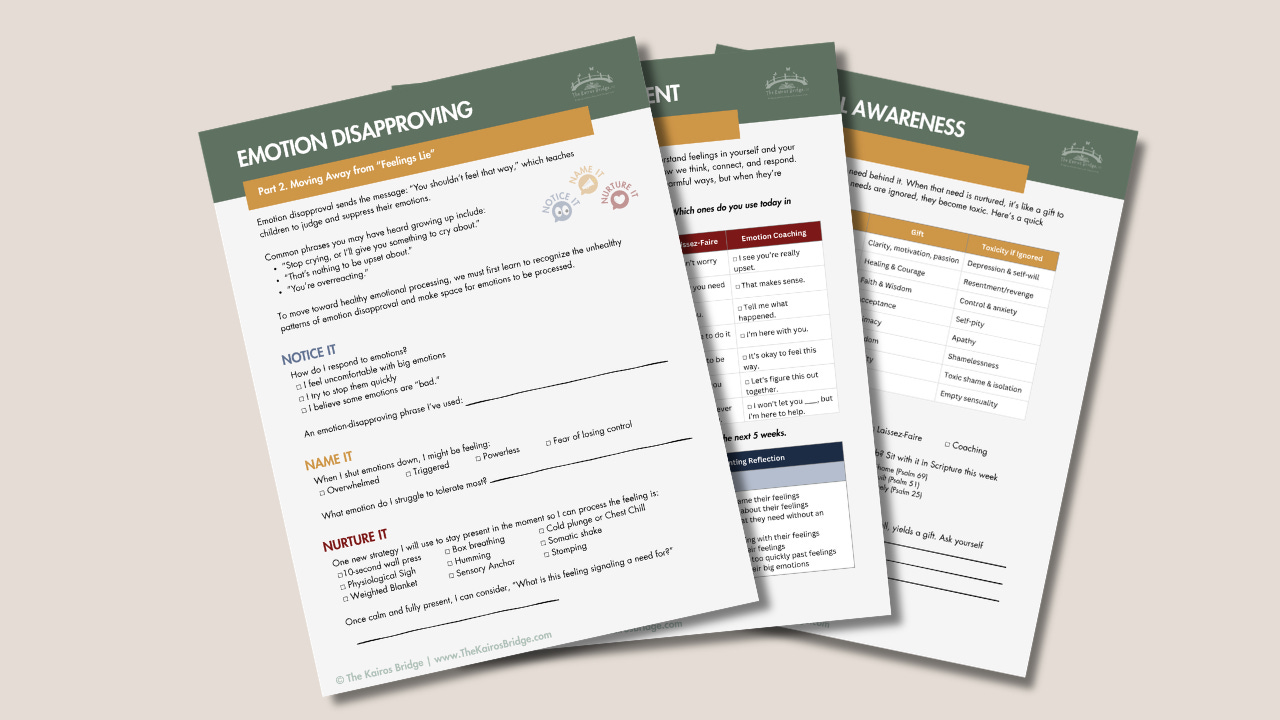
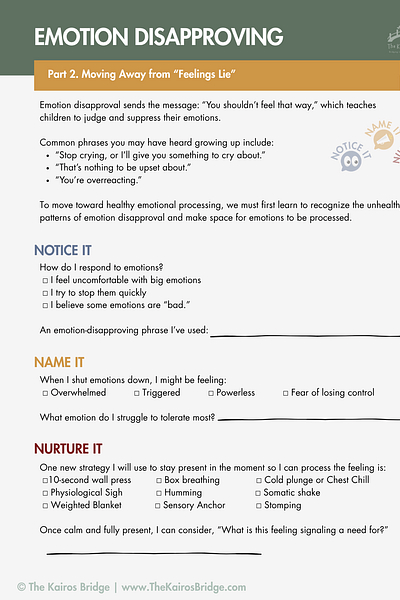
As you allow Jesus to rewrite the story of your feelings, you can help your kids do the same. I’ve designed a downloadable worksheet to help you consider this in everyday parenting moments.
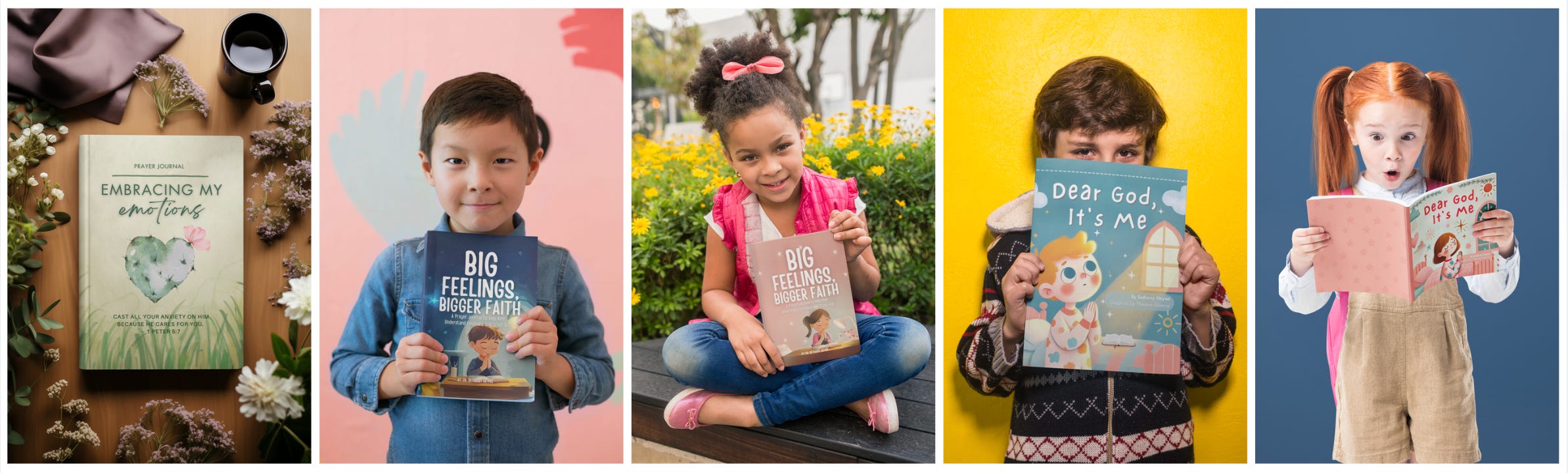
You can also check out my books on Amazon for a deeper 30-day journey:
Embracing My Emotions journal for adults
Big Feelings, Bigger Faith journal for kids 6 to 12
Dear God, It’s Me journal for kids 3 to 5
Fun fact for readers: Each opening story is a behind-the-scenes look at a character from The Lost Heart Song Fiction Series. This multi-part Substack issue explores emotional awareness, emotional processing, and emotional regulation. Don’t miss next week’s issue on emotional dismissal and numbing.