


The email has been sitting there for six days. You've opened it, seen it, and closed it again a dozen times. Sure, you’re busy, but you know it’s more than that. You just can’t fully explain why.
If you wrestle with shame gremlins, then you’ve probably already called yourself lazy, undisciplined, or "just not a self-starter."
Perhaps you’re more self-compassionate, so shame isn’t the issue, but guilt sure is. It builds up and weighs on you for days or even weeks, until you start avoiding the person altogether.
But the truth of what you’re struggling with is simpler and more forgivable than that. The same brain mechanism that stalls a child on the couch from starting their laundry is still running in you, just wearing adult clothes.
It's task initiation again, and understanding what's actually happening in that stalled-out procrastination isn’t about changing your self-talk. It’s about changing your approach to tasks altogether.

A Little Bit of Physics to Go With This Week’s Psychology
An object at rest stays at rest. You already know this from yesterday’s parenting article (or from 5th-grade science class).
What's less obvious is that procrastination isn't a time management problem. Researchers who study it closely describe it as an emotion management problem.
We don't avoid tasks because we're bad at scheduling; we avoid them because the task is attached to a feeling we don't want to have: dread, inadequacy, boredom, or fear of doing it badly.
Avoidance buys a few minutes of relief, but the task, and the feeling, are both still there when you open the email again. So very little progress is made.
Task Chunking Isn’t Just for Kids
I talk about task chunking in my kids’ Bible Study Workbook on Growth Mindset, Goal Setting & Resilience. But I’ve actually had several adults tell me how helpful the workbook has been for them, too, in their adult lives.
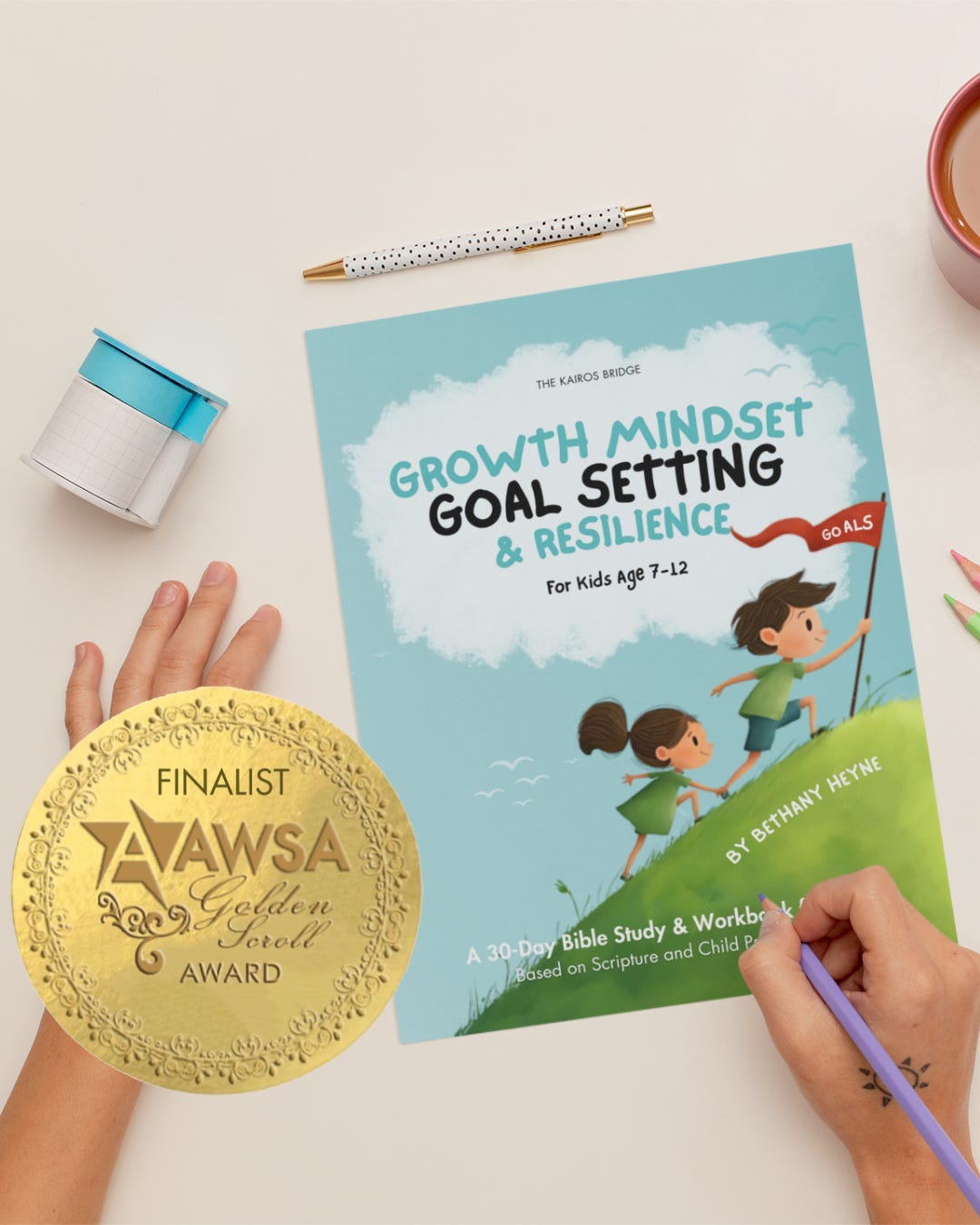
Many of us were taught to set goals, so we outline a task list. But the task list quickly becomes overwhelming and we don’t know where to start.
It’s not about being lazy or incapable. It’s because the task is too big. Just like yesterday’s article outlined, “do your laundry” isn’t one task; it’s twelve. The same goes for “Write the proposal”, which is actually more like 17 tasks in one, and your brain, tired and already overloaded, can't process where to start, much less find the energy to start, so it finds Instagram instead.
The secret is to break the tasks down into steps that the brain can check off along the way. Those are called process goals, and they help when task initiation feels challenging.
It’s Not Just About the Size of the Task, But Also the Amount
Here's the layer that's harder to admit: we are human, and our capacity only goes so far. Overcommitment steals the margin your brain needs to muster the start-up energy required to initiate a task.
When every day is full of yeses that we committed to without discernment, our nervous system is now out of the energy necessary to start a single task because we’ve juggled the 15 that were never meant to be ours.
Busyness for busyness's sake doesn't make us productive. It makes every single task harder to start, including the ones that matter most.
Paul wrote that we were "created in Christ Jesus for good works, which God prepared beforehand" (Ephesians 2:10). Not every good work is ours to do. There were ones prepared specifically for you, for me, and for those around us. We can’t keep picking up tasks that aren’t ours, because it exhausts us mentally, and then we lack the energy to even do the ones that were meant to be ours.
Overcoming Procrastination Today
That’s why procrastination is rarely a character flaw to be punished, and more often a signal pointing to an emotional overwhelm you haven't named or a “yes” you never should have given.
• Notice it • Name the feeling attached to the stalled task before you touch the task itself. Dread? Fear of doing it imperfectly? Boredom? The feeling, not the task, is usually what you're actually avoiding. Address the feeling, and the task becomes less intimidating and easier to start.
• Name it • Ask what's really underneath the delay. Is the task genuinely unclear, so you don't know the first step? Or is your calendar so full of obligations you never prayerfully considered that you have nothing left to initiate with?
• Nurture it • Today, do three things.
First, shrink the task to a single visible first step, open the document and write one sentence, nothing more, and let momentum do the rest.
Second, look at this week's calendar and find one "yes" that was never truly yours to give. Practice saying no to it, or postponing it, so the tasks that are actually your calling have room to breathe.
Third, whichever emotion looms as a threat over that task, work on addressing it. Deflate the balloons of shame and guilt by simply taking the first step. Done is better than perfect. Create a mini-reward plan: “Once I finish the first 3 steps, or thirty minutes, I’ll take a fun-break.”
Be Prayerful About It
Tonight, before you add one more thing to tomorrow, ask what God is actually inviting you to do, and be willing to let go of what He isn't. A full calendar isn't the same as a faithful one. Invigoration comes from doing the work that's genuinely yours, not from staying busy enough to feel productive.
You already have what you need to start the one task you've been avoiding. It's smaller than the feeling has made it look.
Next week: once you can finally start, what to do with everything competing for what comes next, planning and prioritization.