
Summary
- Every behavior carries a feeling, a thought, and a need
- When we see the signal beneath the surface, our parenting shifts
- Use Notice It • Name It • Nurture It to build attachment, verbal grounding & life-skills
Amara stood in the doorway of the garage, ready to scold Micah for the mess he’d made on Jonas‘s workbench.
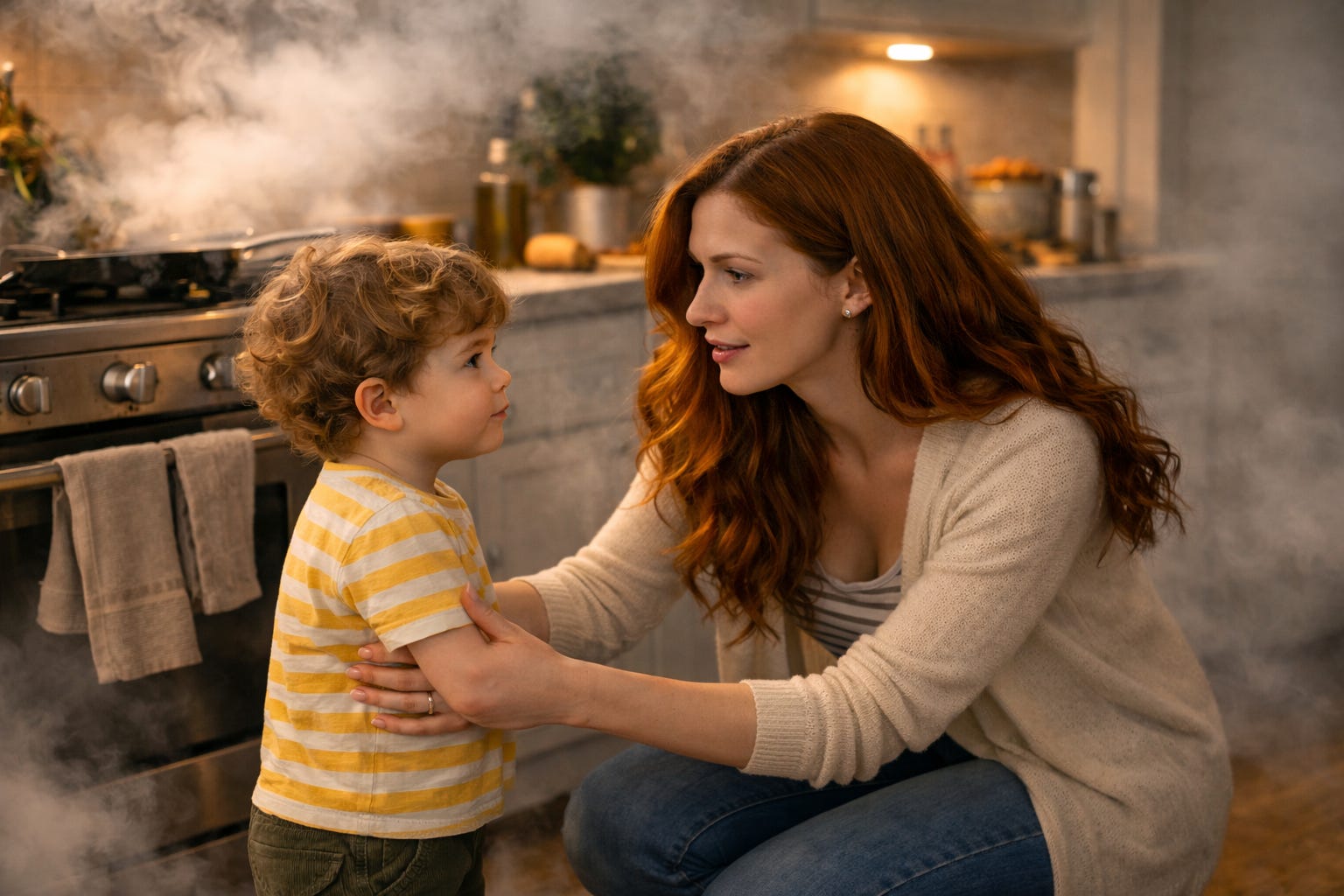
She would’ve been more patient with her innovative 5-year-old had he not just flooded the bathroom sink “trying to give his monster trucks a bath” or filled the kitchen with smoke while trying to fry mud pies in her good pan.
She was already exhausted from Liora‘s toddler tantrum in the grocery store, Asher’s meltdown over his math homework, and Selah’s teenage backtalk.
Amara loved her four kids fiercely, but on some days, she was ready to hang up the proverbial apron and return to her corporate job, where managing teams was easier than wrangling kids.
Why was every day so exhausting?
A thought surfaced: what were they trying to accomplish? Surely they didn’t set out to annoy her?
The smell of smoke lingered, and it clicked. Behavior is a smoke signal. Fires are wonderful when well fueled — warmth, light, connection. But toss in synthetic fuel, and the smoke turns harsh.
The goal wasn’t to snuff out the fire of passion, initiative, creativity, identity, but to feed it better fuel.
Behavior is Signaling What’s Underneath
Behavior is what we see, but it’s rarely the whole story. Behind most actions is:
a feeling (overwhelm, worry, shame, excitement)
a thought (“I’m in trouble,” “No one hears me,” “I can’t do this”)
a need (connection, competence, autonomy, rest)
Parent lectures may buy short-term compliance, but the behavior returns tomorrow. And the next day. And next week.
Because we never addressed what was behind the behavior.
Evidence from Child Psychology
Research shows that when parents link behavior to the underlying feeling, thought, or need, they can redirect behavior in ways that last.
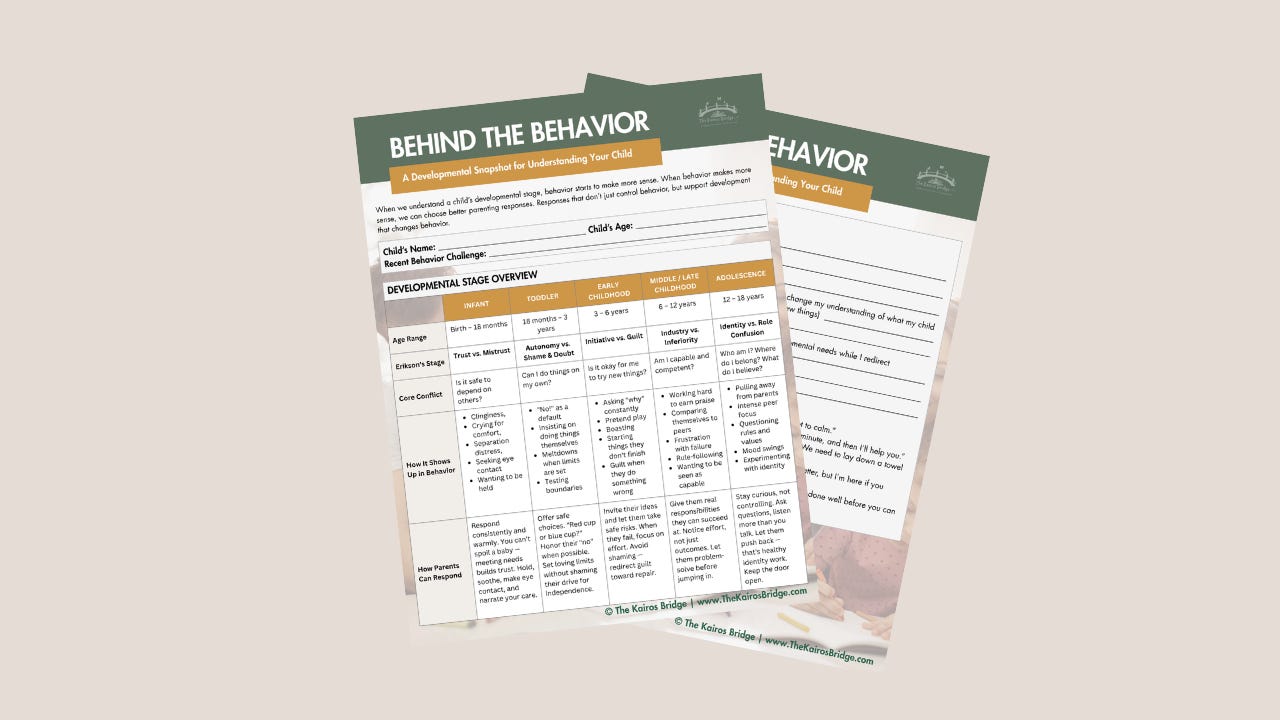
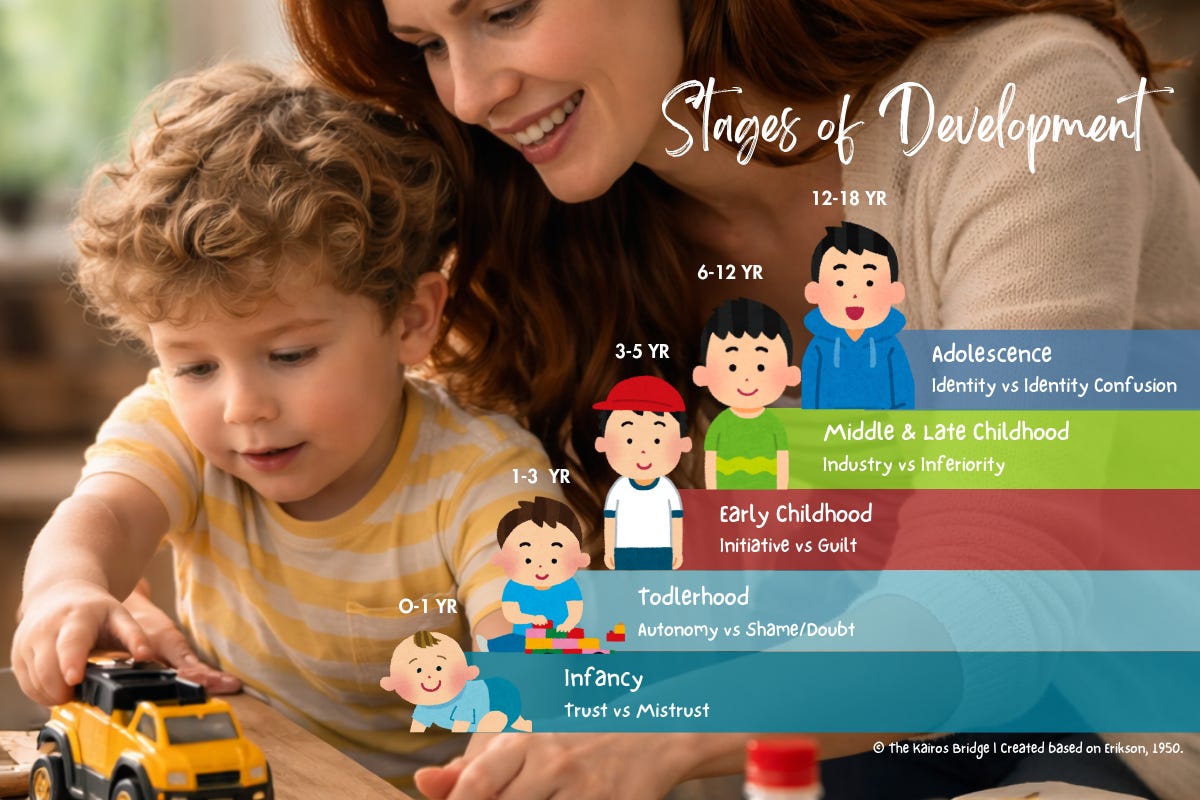
Part of that work is knowing the developmental task in front of a child— building trust (infancy), independence (toddlerhood), initiative (3 to 5 years of age), confidence and capability (6 to 11 years of age), identity formation (12 to 18 years of age) — while skills like emotional regulation, moral judgement, empathy, navigating conflict, responsibility, motivation, and all of the cognitive skills that make up executive function, are still forming. No wonder kids struggle at times; the load is heavy.
Effective parenting reaches the heart and teaches skills, not just correcting surface behavior.
Scripture’s Pattern of How God Saw Beneath the Surface
Countless examples in Scripture show us how individuals misbehaved, and yet, God didn’t just address behavior. He addressed the heart and met them in their moments of need. He Noticed · Named · Nurtured.
Hagar, unseen and fleeing, is met by “the God who sees,” who names her reality and provides (Genesis 16). Notice It
Elijah, shut down by fear and exhaustion, is given rest and food before a hard talk (1 Kings 19). Name It
Peter, fresh from failure, is restored by Jesus with attuned questions and a renewed purpose (John 21). Nurture It
One of my favorites is Zacchaeus. Jesus didn’t correct him in public. He invited him to a table. By the end of the meal, Zacchaeus chose to behave better on his own. Jesus, attuned to Zacchaeus’s deeper need, thus turned his heart, and his behavior followed.
When our children misbehave, do we wait until we get home, make a delicious snack, and sit down to talk? Or do we light into their behavior as soon as we’re in the car, or worse, in the grocery aisle?
So what does this mean for parenting our kids?
Let’s treat behavior as a smoke signal. It’s not about putting out the fire. It’s about fueling it with high-quality wood, so it burns cleanly and can be enjoyed.
Let’s practice seeing what’s behind the behavior so we can respond well.
Notice It (attachment): Treat behavior as a signal for needs (freedom, power, fun, safety, security, attention, affection, encouragement, support, soothing, etc). Offer calm, judgement-free attention: “I see tight shoulders,” “Your voice got big when I said homework.” Your steady presence cues safety and begins co-regulation, which is the doorway to learning.
Name It (verbal grounding): Ask them to identify what they were thinking, feeling, needing — or offer a gentle guess. “I wonder if staying in the cart felt too squished.” “I wonder if you’re worried about getting it wrong.” Words organize big feelings and lower intensity.
Nurture It (growth): After calm has returned, teach a better path to meet the need — emotion coaching, small choices, chunking tasks, clear boundaries. “Two choices: brush teeth first or pajamas first. “Let’s do the first problem together, then you try.”
This isn’t letting behavior slide. Hold limits and address the heart at the right time.
If you worry this is “too soft,” be sure to pair it with clear boundaries for one week and track recovery time and cooperation. Many families see fewer power struggles, faster return to calm, and natural shifts in behavior. They’ll be small at first, but become more noticeable over time.
Next Week
We’ll unpack the quiet questions children ask behind behavior at each stage of Erikson’s psychosocial development. When you know what your child is asking — “Am I safe?” “Can I do things?” “Who am I?”—you can answer it in ways that shape identity with wisdom and hope.
You begin to realize they aren’t trying to be difficult; they’re just being developmental.
Fun fact for readers: In each issue, I follow a character from my in-progress fiction series, The Lost Heart Song, as she navigates real parenting and real healing. Today, you got a glimpse into the life of Amara from The Lost Way.