


No Time for Emotions (from THE LOST HEART SONG)
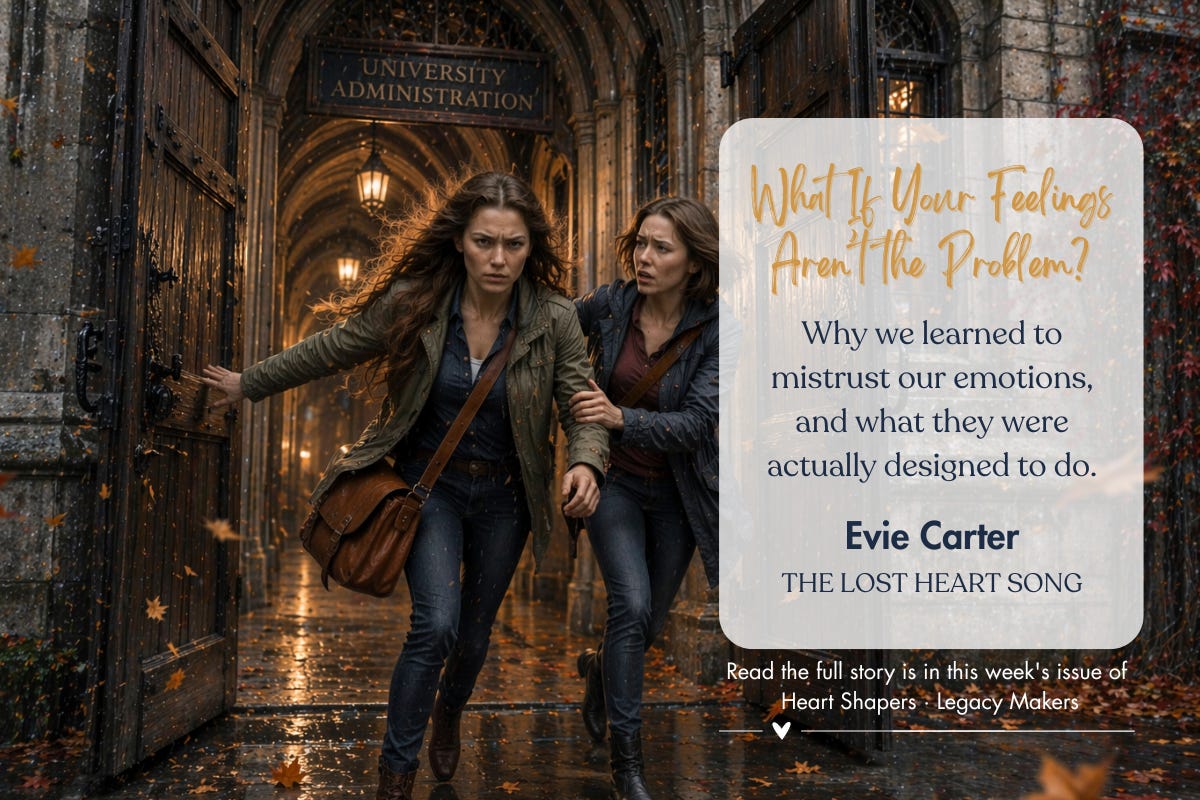
Evie pushed the large wooden doors from the University Administration building open with such force that they nearly bounced on their iron hinges.
She heard the rapid click of Noa’s heels behind her, trying to keep up.
“Evie, stop! Take a breath,” Noa called out to her friend.
“I don’t need a breath. I need a plan.” Evie snapped back.
Noa grabbed her elbow, “You need time to process what just happened. How are you feeling?”
Evie let out a hollow, cold laugh, “HA! You know better than to ask me such ridiculous questions. I feel nothing. Feelings lie.”
Noa closed her eyes and sighed deeply with resignation. She loved her friend dearly, but she knew that Evie couldn’t keep dismissing her emotions. They would catch up to her eventually.
Three Toxic Patterns of Emotional Processing in Childhood
Evie’s response to feelings is common. How we learn to process emotion is shaped early in life. A baby cries and learns whether they are safe based on how someone responds. A toddler melts down and begins to internalize the meanings of emotions based on our response. By adolescence, these patterns often show up as withdrawal, emotional outbursts, or decisions driven by whatever feels strongest in the moment. Our responses to our kids’ emotional struggles become the neurological coding that shapes how they handle emotions in the future.
Over time, many of us learn patterns like:
“Stop crying, or I’ll give you something to cry about.” (disapproving)
“You’re fine. It’s not that big of a deal.” (dismissing)
“Just do what feels right.” (laissez-faire)
These are insignificant moments. These moments actually teach us whether emotions are dangerous, irrelevant, or in control.
Suddenly, these little pain points are tempting to bottle up and ignore.
Processing Emotions
The word emotion comes from the Latin verb movere, which means “to move”. An emotion begins as a fast, automatic response in the brain’s limbic system, specifically the amygdala, and is designed to trigger the body to take action in response to a real or perceived threat. The designated action prioritizes survival by signaling the body to prepare for fight, flight, freeze, or fawn. Your heart rate might change, your muscles might tense, or your stomach might tighten. It happens before you even think about it.
Feelings come next as your conscious mind makes sense of that emotional response based on past experiences, thoughts, language, and meaning-making. Researchers have identified core emotional categories that shape how we experience and interpret the world. In everyday life, these often show up in ways we recognize as anger, hurt, fear, sadness, loneliness, guilt, shame, and joy.
Basically, emotions are the data signals, while feelings are the interpretive story we develop. When that interpretation is faulty, we often conclude “feelings lie”.
This saying, “feelings lie,” is a common form of emotion dismissing and disapproving, while “follow your heart; do what feels right” is a common form of emotion laissez-faire. Both are cognitive shutdown strategies that relieve the brain of the discomfort of emotional integration, but leave the body trapped in an unresolved emotional state.
These strategies aren’t without consequence. Research shows that poor emotional integration not only yields poor decision-making but also leads to internalizing behaviors (depression, anxiety, loneliness, isolation), externalizing behaviors (aggression, addiction, impulsivity, defiance), and long-term health risks (heart disease, cancer, and gastrointestinal problems).
To help children learn healthy emotional processing, we must first slow down to give attention to what is happening internally, allowing the brain to begin integrating emotional signals with rational thought. Then we can put words to those emotions and feelings, which calms the amygdala, reduces reactivity, and increases a sense of control. From there, we can introduce truth and perspective to help the brain update its predictions and form new neural pathways. This is how change happens.
It’s not about ignoring emotions or dismissing feelings. It’s about noticing them, naming them, and responding in ways that nurture growth.
The Pattern in Scripture
Scripture provides a pattern of healthy emotional processing.
Look at King David, who Scripture calls “a man after God’s own heart” (1 Samuel 13:4; Acts 13:22). God chose David, despite his imperfections, because David submitted his mind, will, and emotions to God.
David’s secret was not ignoring his feelings, but engaging them head-on so he could anchor them in God’s truth. One of the most beautiful examples of emotional transformation is in Psalm 51. When confronted by the sin of murder and infidelity, he doesn’t run from the guilt, nor does he let it consume him. He gives it to God. “Create in me a pure heart, O God, and renew a steadfast spirit within me.” (Psalm 51:10) That’s not a pattern of avoidance or indulgence, but one of submission and transformation.
Romans 12:2 invites us into this same pattern: “Do not conform to the pattern of this world, but be transformed by the renewing of your mind. Then you will be able to test and approve what God’s will is—his good, pleasing and perfect will.” Notice the Greek use of the word for mind, nous, which means “the process of feeling, judging, and determining”. That’s not just our mind, that’s our feelings, too!
Jesus showed us a perfect example of emotional integration in the time of His greatest distress. He openly admitted in Matthew 26:38, “My soul is overwhelmed with sorrow to the point of death”. He took that feeling to God in prayer and made a request: “My Father, if it is possible, may this cup be taken from me.” (Matthew 26:39a) Then, Jesus yielded to the Father’s will: “Yet not as I will, but as you will.” (Matthew 26:39b)
Jesus noticed the emotional signal, named the feeling, thought, and desire, and then allowed God to guide His actions for the greater good.
Transformation begins with honest expression.
How You Can Start Processing Emotions This Week
Over the next several issues of Heart Shapers · Legacy Makers, we’ll begin unpacking the patterns that shape emotional development. Let’s start today with emotional awareness.
1. Notice It: Pay attention to your default pattern. Do you dismiss, disapprove, or allow feelings to run the show? Or do you use an overall emotion coaching approach?
2. Name It: What feeling do you tend to ignore or numb? Sit with it in Scripture this week rather than rushing past it. Anger (Psalm 73), Fear (Psalm 77), Hurt (Psalm 55), Sadness (Psalm 42), Lonely (Psalm 25), Shame (Psalm 69), or Guilt (Psalm 51).
3. Nurture It: Every feeling signals a need, and if nurtured well, yields a gift. Ask yourself what the feeling might be signaling a need for (e.g., comfort, connection, attention, help). We’ll come back to this in future weeks to discuss the gift of each feeling.
If you want to go deeper, this week’s Parenting Guide walks you through this in a simple and practical way.
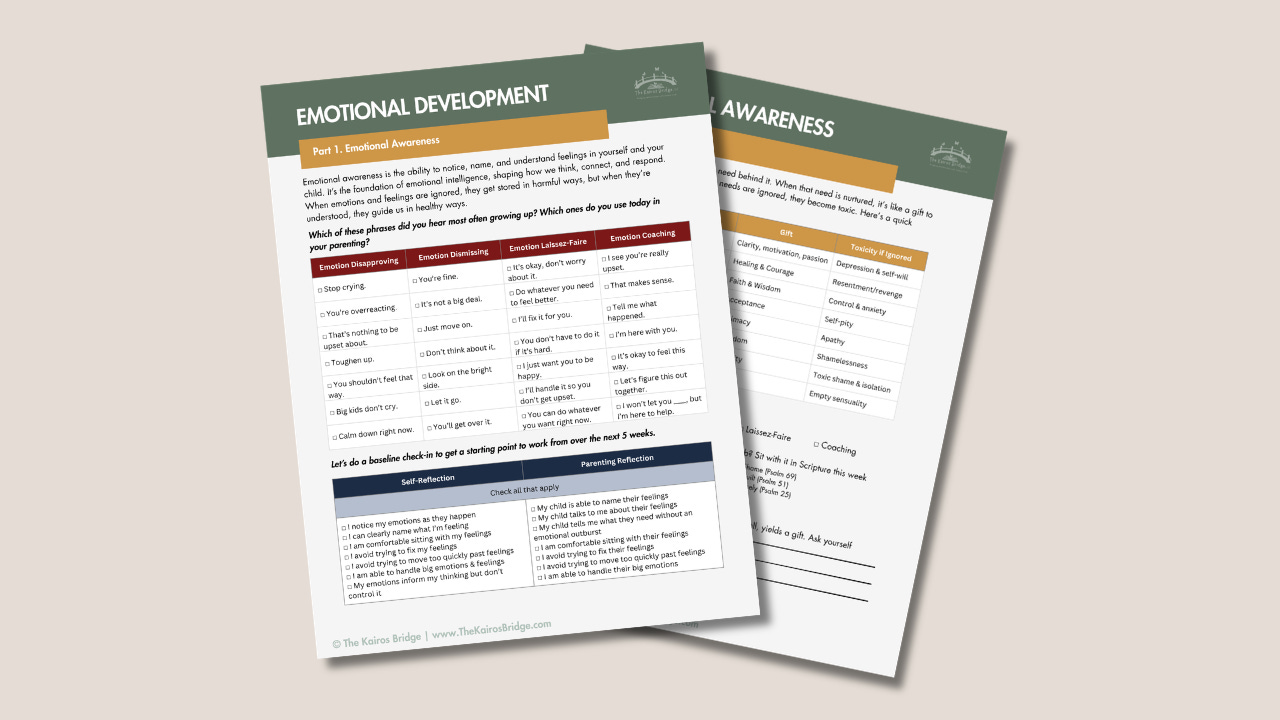
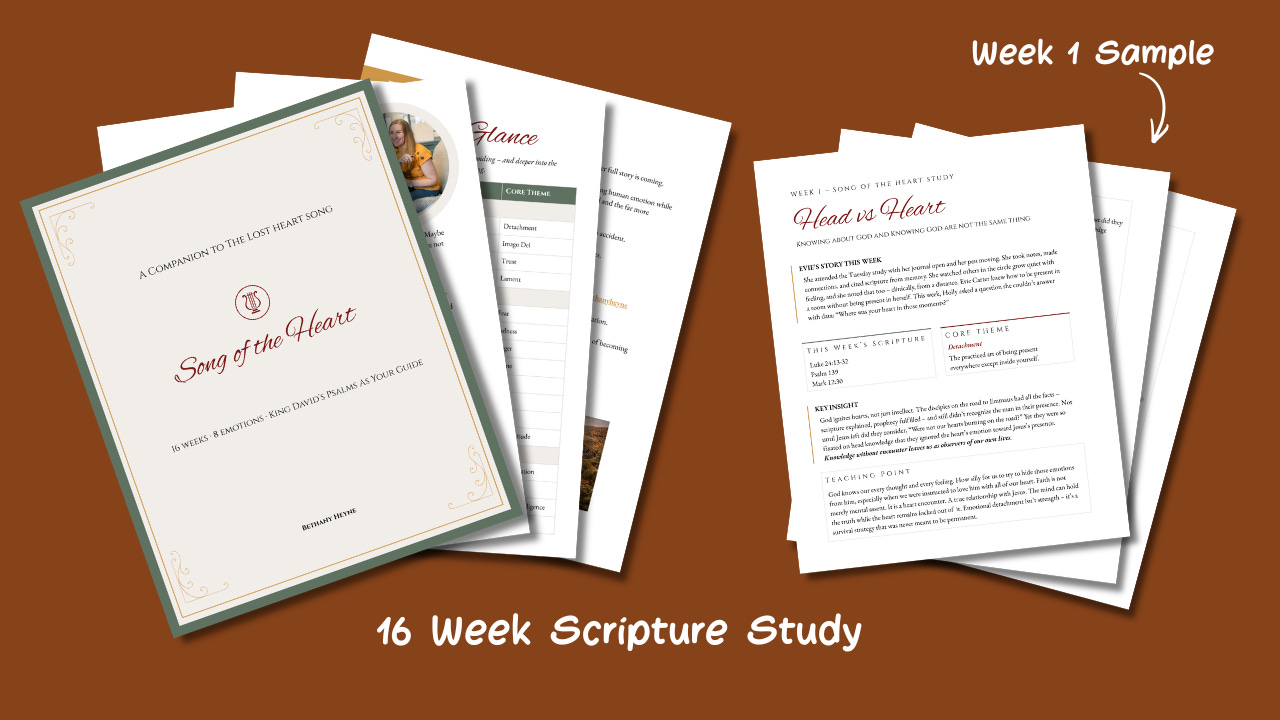
And if you’d like to experience it more personally, I’m also sharing access to the Song of the Heart Scripture Study, so you can journey with Evie, one step at a time.
Next week, we’ll look more closely at what happens when we start calling our feelings “liars”… and why that pattern quietly reshapes more than we realize.