


Summary:
Why sustained attention requires more than “sit still and pay attention”
What Peter’s sinking in the waves reveals about staying fixed on what matters
Simple, fun ways to help your child build the skill of returning to a task; no lecture required
If “No!” was my toddler son’s most-used word, then “Focuuuussss” was mine.
Excited ramblings about pool time plans that distracted from actually packing said toys. “Focus!”
Finding long-lost Legos in the closet tripled how long it took to clean up the bedroom. “Focus!”
For my step-daughter, whose ADHD kept her brain running a mile a minute, the word did little more than frustrate her.
“I am focused. Just not on that part anymore.”
Her brain would literally seem to forget the cup of milk in her hand as she darted outside to catch up with friends on the way to the playground.
“SQUIRREL!” took on a whole new meaning as distractions stole their attention.
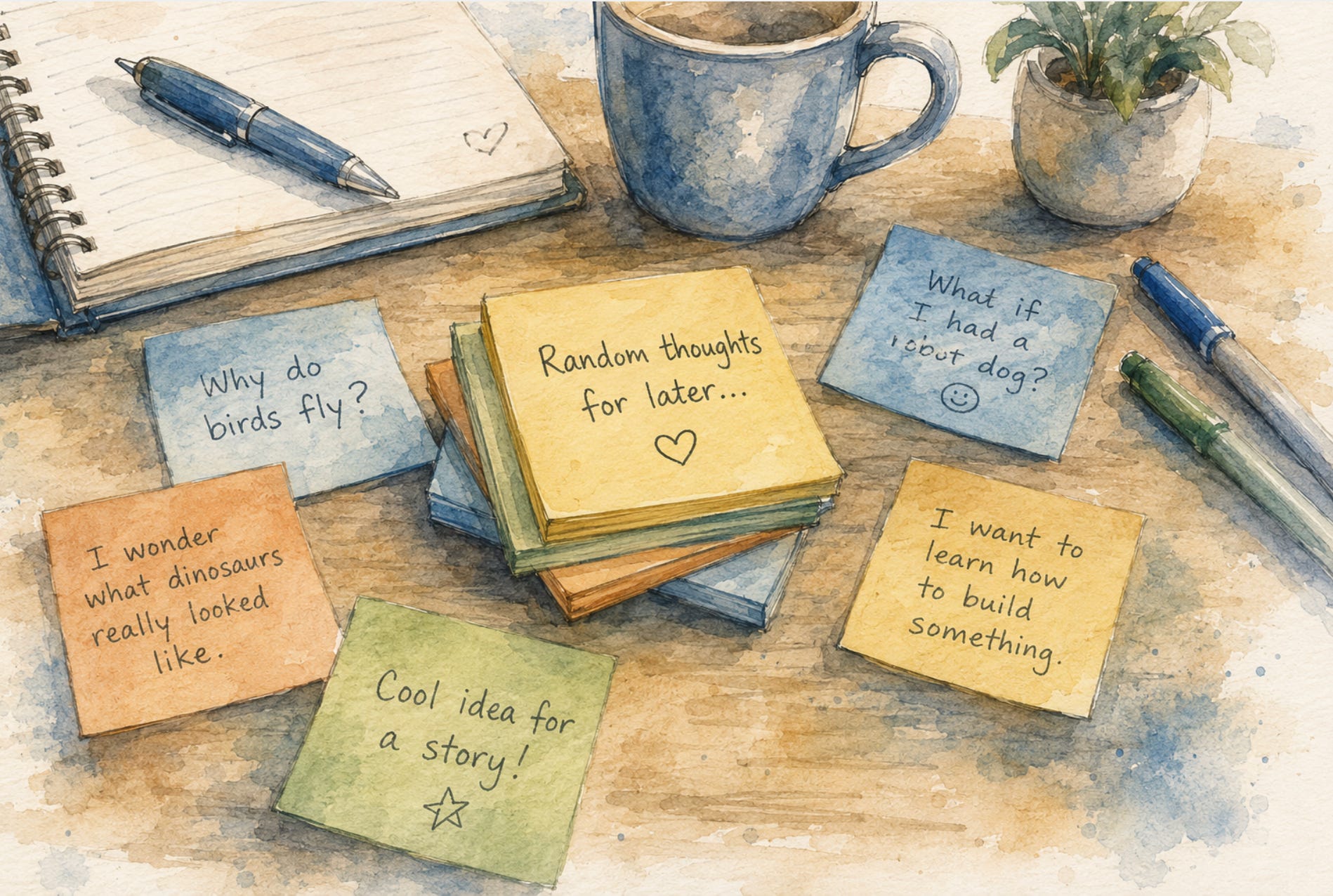
I loved my son’s second-grade teacher. Rather than punishing his constant fidgeting, she strapped a bungee band to his chair legs, giving him a way to release physical energy. Rather than scolding him for blurting out off-topic, she gave him a stack of sticky notes to write down his random thoughts for later.
He loved that sticky note so much that he carried one with him everywhere he went for two years!
That’s how you build sustained attention.
What Is Sustained Attention
Sustained attention is another of the eleven executive function skills built in childhood.
As parents, it’s tempting to urge them to sit still and just pay better attention, but really, the brain science says it’s about learning how to keep attention where it belongs, despite distractions.
Think of it like holding a flashlight in a dark room.
The goal isn’t to make the flashlight brighter.
It’s to keep it pointed at what you’re trying to see, even when something else catches your eye.
In a world full of distractions, helping kids build sustained attention becomes the brain pattern they carry with them into adulthood.
When tasks become tedious, we help them stay engaged by chunking tasks
When mental energy runs low, we create focused-fun cycled breaks
When frustrations loom, we provide encouragement
When they walk away, we help them figure out how to return and retry
Those small habits support the dopamine releases necessary to encourage healthy patterns of sustained attention.
But it starts with a parent who is present, attentive, and responsive to their efforts. That secure attachment gives them the confidence to stick with hard things.
It continues with a parent who offers emotional co-regulation, so a child’s nervous system learns to handle the stress that threatens their progress.
It is solidified by the parent, who helps the child learn to filter out distractions with tools such as bungee bands, sticky notes, and focus breaks.
Sustained Attention Affected Peter’s Ability to Walk On Water
In Matthew 14:28-30, Peter showed us exactly how distractions that threaten sustained attention can derail our progress in life.
Peter starts walking on water while his eyes are fixed on Jesus. Then verse 30 tells us that “when [Peter] saw the wind, he was afraid and began to sink”. The wind distracted him from maintaining focus on Jesus and the task of walking on water.
The distraction led to the failure.
The same can be true for our kids as they make good progress initially, only to be derailed by:
comparing their progress to a friend
worrying about running out of time
not having all the needed supplies present
fearing failure in the next step and thus, just giving up
becoming distracted by other activities
Peter is a great example to help our kids learn not to be distracted by the wind and waves around them, but to stay focused on the main task, and Jesus!
Practical Parenting
You can help your child build sustained attention.
· Notice It ·
If your child can remember the steps, get started, but loses momentum somewhere along the way when distracted by something else, there’s a good chance sustained attention needs to be built.
What activities tend to be most challenging for them to maintain attention to? Chores? Homework? Conversational stories? Bible Study? Prayer? Other tasks? When we notice what holds their attention versus what loses it, it gives us bookends to use in the Nurture It step.
· Name It ·
For children who struggle to finish a task, sustaining attention can feel daunting. Start here:
Give them an anchor point they’re good at or motivated by: “You’re so good at …” or “You sure do love…” This allows you to point out the fact that they are capable of sustained attention, given the right motivation
Empathize with the frustration: “Distractions can be tricky, and they get in the way of finishing a task. It doesn’t mean we are bad at the task or can’t do it. It just takes a bit more brain muscle.”
Name the skill: “We all work on learning to focus on one thing at a time. It’s a skill called sustained attention, and it just takes practice.”
· Nurture It ·
In the moment:
Ensure all necessary supplies are readily available when they start the task.
Clear the desk/table and the environment of distractions and noise.
Provide focus-supportive fidgets to support the exertion of physical energy
Break large tasks into smaller steps.
Create focused-work/fun-break cycles, extending the timing and rounds little by little each day (Hint: sticker charts to track progress are great for triggering dopamine reward)
Other fun ways to build sustained attention:
read a book to completion
put together a puzzle
tell stories at dinner without interruption
clean one mess at a time
limit screens and constant stimulation
Sustained attention isn’t about never getting distracted. It’s about learning to focus despite distractions and return to the activity at hand.
References:
Bendel-Stenzel, L. C., An, D., & Kochanska, G. (2022). Infants’ attachment security and children’s self-regulation within and outside the parent–child relationship at kindergarten age: Distinct paths for children varying in anger proneness. Journal of Experimental Child Psychology, 221, Article 105433. https://doi.org/10.1016/j.jecp.2022.105433
Fisher, A. V., & Kloos, H. (2016). Development of selective sustained attention: The role of executive functions. In J. A. Griffin, P. McCardle, & L. S. Freund (Eds.), Executive function in preschool-age children: Integrating measurement, neurodevelopment, and translational research (pp. 215–237). American Psychological Association.
Son, H. M., Calub, C. A., Fan, B., Dixon, J. F., Rezaei, S., Borden, J., Schweitzer, J. B., & Liu, X. (2024). A quantitative analysis of fidgeting in ADHD and its relation to performance and sustained attention on a cognitive task. Frontiers in Psychiatry, 15, Article 1394096. https://doi.org/10.3389/fpsyt.2024.1394096
Immensely valuable, Bethany. Thank you for this and for your work!